In addition to creating a support system of caring people around you, it is time to stop being your own worst enemy and begin to become your own best friend. Let's start with ways you can take better care of yourself. As a psychotherapist, I see time and time again the adverse effects of my clients' lack of self-care. In general, women have been conditioned to be the givers, but men aren't very good at making themselves a priority, either.
Do you put everyone else's needs before your own? What do you do to take care of yourself? Are you finding time to play? To laugh? To relax? To nurture yourself? The chances are pretty good that you are not — at least not yet. But with the help of some simple tools, that can — and will — change.
In days long ago, I was always more interested in assisting others than in taking care of myself. I didn't ever want to appear selfish, so I continued to give and give of myself until eventually the well ran dry. While being selfish can mean being stingy, exercising self-care is filling yourself up 之前, 不会 代替, giving to others. I was thrilled to discover that when I spent time caring for myself first, I had far more energy for others.
Every time we're on an airplane, we hear some version of the following: "In case of a sudden drop in pressure, the oxygen masks will appear. Put your own mask on first and then assist others." What is true for literal oxygen masks in singular emergencies is also true for metaphorical ones in daily life. We can't really support others unless we are taking care of ourselves. I remind my clients (and sometimes myself) over and over again: Put on your own oxygen mask first, and then you will have something to give.
Doing What You 应该 和 有 To?
In addition, how many of us lead our lives doing what we think we 应该 do or what we think we 要 do? During my childhood and young adulthood, I did whatever I thought I was supposed to do. I dreamed about finding a giant book of rules so I could be certain to live my life according to the 该做些 and not make any mistakes!

The external voices of my parents and teachers told me what I should do, such as "You should go to bed now" or "You should be nice all the time," and what I should not do, like "You should not show anger" or "You should not be fat." I internalized these voices, and soon my own inner voice was barking commands at me: You should go to sleep. 您 应该 smile more. You should not eat those cookies. 您 should be ashamed of yourself. You should lose weight. My inner world, the voices in my head, became a constant chatter of 该做些 和 应该 nots — about everything!
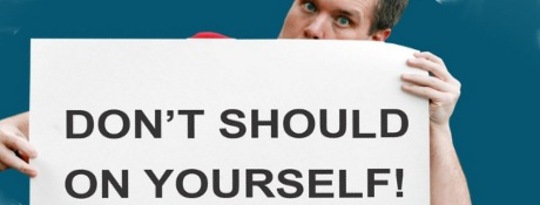
During my journey of recovery, I found authors and lecturers who helped me change my self-talk, with suggestions such as "You shouldn't 应该 on yourself." The motivational author Louise Hay suggests we change our 该做些 至 coulds. When I catch myself saying I should, I quickly correct it to 我可以 and am amazed at how quickly my disposition improves. Try it — you'll see what I mean. I could go to sleep. I could smile more. I could be nice all the time. It really feels different.
Rebelling Against Yourself?
This is also true for the words 有。 I used to say to myself, I have to make 晚餐。 I have to pick up 这个 孩子们从 school. I have to exercise. I have to go on a diet.
The part of me that is a rebel didn't want to be told what I have to do — so sometimes I would simply not do it. Other times I would do it with the attitude of a victim — Oh, 贫困 我, I have to pick up 这个 孩子们从 学校。 Try changing each 要 至 选择这样做。 What a difference this makes — when we change the words, we change the energy. I choose to make 晚餐。 I choose to pick up 这个 孩子们从 school. I choose to exercise. 这个单词 选择 dissipates that poor-me voice and the feeling of being a victim and leads instead to feelings of self-empowerment.
Turn Your Life Around Assignment
 Write down at least ten things you think you have to do or should do. Your list might look like this:
- I have to clean the house.
- I have to prepare meals.
- I have to pay bills.
- 我应该减肥。
- I should call my parents.
- I should take a walk, etc.
Read it aloud. Then change each 要 至 选择 to, each 应该 至 可以。
Revised List
- I choose to clean the house.
- I choose to prepare meals.
- I choose to pay bills.
- I could lose weight.
- I could call my parents.
- I could take a walk.
Read the revised list out loud. It carries a different energy than the first list and should (oops, did I use that word?!) feel very freeing.
Your ongoing assignment is to become more conscious of the words you use, so when you hear yourself say (perhaps in a whiny tone) "I have to make dinner," you will catch yourself immediately and change it to "I choose to make dinner." And in so doing, you will find yourself feeling far more content and empowered in your everyday life.
经出版商 Conari Press 许可转载。
Red Wheel/Weiser, LLC 的一个分支机构。 www.redwheelweiser.com.
©2011 Meryl Hershey Beck 版权所有。保留所有权利。
文章来源
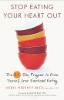 停止用食物麻痹自己:21天摆脱情绪化进食计划
作者:梅丽尔·赫尔希·贝克。
关于作者
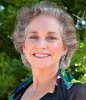 梅丽尔·赫尔希·贝克(Meryl Hershey Beck),文学硕士、教育硕士、持证专业咨询师(LPCC),早年曾任高中和社区大学教师。1990年,她成为一名持证专业咨询师(LPCC),专攻十二步康复法和饮食失调症,并很快设计并成功实施了为期一周的门诊食物滥用治疗项目。1998年,梅丽尔发现了能量疗法,并开始撰写文章,向全美各地的心理健康从业者教授能量疗法。作为该领域的权威,她曾在国际研讨会和会议上发表演讲。访问她的网站了解更多信息。 www.StopEatingYourHeartOut.com.